


The Rivers State Commissioner for Education, Dr. Peters Nwagor, has called for urgent and coordinated action toward climate-responsive development, sustainable urban planning, and digital transformation in developing economies.
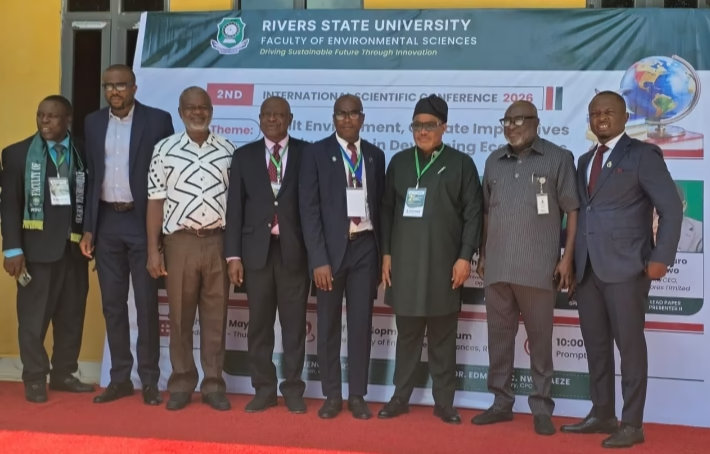
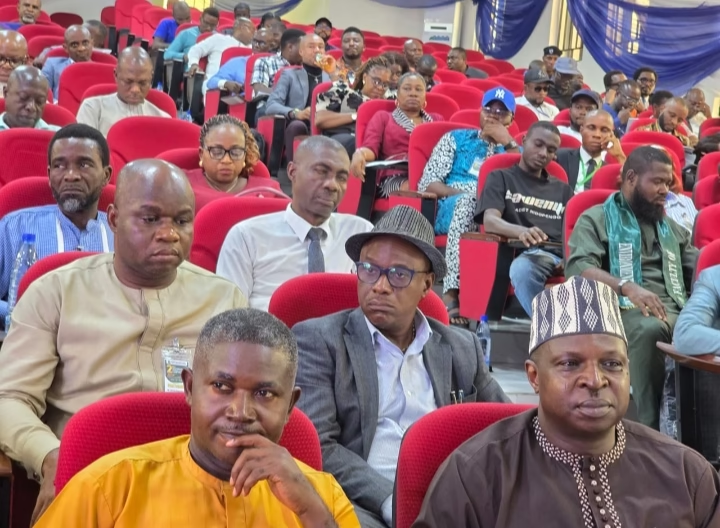
He made the call while delivering his address at the International Conference organised by the Faculty of Environmental Sciences, Rivers State University, themed “Built Environment, Climate Imperatives and Industry 4.0 in Developing Economies”, held at the Staff Development Auditorium.
The Commissioner commended the Faculty of Environmental Sciences and the conference organising committee for their foresight in convening discussions on the critical intersection of the built environment, climate change, and the Fourth Industrial Revolution.
According to him, the built environment remains one of the most visible expressions of human civilisation but continues to face significant challenges in developing economies, including poor planning, weak regulatory systems, inadequate infrastructure, and growing vulnerability to climate-related disasters.
Dr. Nwagor noted that climate change has become an immediate and escalating reality, citing recurrent flooding in the Niger Delta, coastal erosion, extreme weather conditions, and disruptions to agriculture and livelihoods as urgent concerns requiring decisive intervention.
“The built environment is both a contributor to and a casualty of the climate crisis.
We cannot continue to design and construct our environments as though the climate has remained unchanged”, he stated.
He stressed the importance of research and scholarship in shaping informed public policy and sustainable development, urging participants to ensure that their research outputs address real societal and governance challenges.
“As Commissioner for Education, I am particularly interested in the knowledge architecture that underpins progress in these fields.
“Our universities must produce graduates who are environmentally conscious, digitally fluent, and responsive to the demands of modern professional practice”, he added.
Nwagor further called for the review and modernisation of academic curricula in disciplines related to the built environment, including architecture, urban planning, civil engineering, quantity surveying, and estate management, to reflect evolving realities in climate science and emerging digital technologies.
He also challenged scholars and researchers to bridge the gap between academic scholarship and governance by producing recommendations that are practical, scalable, and adaptable to the realities of developing nations.
The Commissioner stated the commitment of the Rivers State Government to promoting climate-responsive development, smart urban planning, and digital innovation across relevant sectors.
Declaring the conference open, the Vice Chancellor of the University, Prof. Isaac Zeb-Obipi, represented by the Deputy Vice Chancellor (Academic), Prof. Richard Amadi, described climate change as a global reality with devastating consequences for the environment.
- Pepple is the Information and Public Relations Officer, Ministry of Education.
