



The Rivers State Government has assured the Joint External Evaluation (JEE) team that it will take appropriate action to address the health security gaps and challenges identified during a five-day assessment of the state’s health security system.
The Permanent Secretary, Ministry of Agriculture, Dagogo Iboroma Mercy, gave the assurance at the end of a workshop conducted by the Nigeria Centre for Disease Control and Prevention (NCDC) through its JEE process team, held in Port Harcourt.
She explained that the assessment was aimed at identifying gaps and challenges in the state’s health security system and developing actionable plans to address them.
She noted that the process was led by the Director, Sub-National Department, Chibuzor Eneh.
Dagogo said the findings and recommendations would be presented to the state government through the collaborative efforts of the three key ministries responsible for health security — Agriculture, Health and Environment.
Speaking at the event, the Permanent Secretary, Ministry of Health, represented by the Director of Public Health, Dr. Ndubuisi Akpuh, acknowledged the need for improved performance in the next assessment.
He attributed the state’s relatively low performance in some areas of health security partly to inadequate collaboration among the three ministries and pledged closer cooperation to develop and implement a work plan targeting critical gaps.
Also speaking, the Permanent Secretary, Ministry of Environment, Okereuku Alwell C., commended the JEE team for its efforts and promised to review his ministry’s workforce with a view to strengthening its contribution to the state’s health security architecture.
Responding, a Director at the NCDC, Dr. Olubunmi Olopha, thanked the state government for taking the bold step of undertaking the assessment.
She stressed that strategic investment in health security would not only reduce the long-term economic burden associated with disease outbreaks, but also safeguard development and stability.
Olopha noted that strong leadership and sustained commitment at the highest levels of government, as well as across Ministries, Departments and Agencies (MDAs), were critical to protecting the health of citizens.
The JEE team commended participants from the three ministries for their transparency and active participation throughout the evaluation process.
It urged the state government to give adequate attention to the findings and implement the recommendations.
The team also commended Rivers State for its dedicated workforce, transparency and demonstrated political will, particularly the state’s funding of the Rivers State Emergency Medical Services (REMSAS), including marine ambulance services for riverine and hard-to-reach communities.
It further noted the state’s access to complementary funding mechanisms, including the Basic Health Care Provision Fund (BHCPF), and support from development partners.
The JEE identified several challenges requiring urgent attention, including: Weak and fragmented surveillance, information management and documentation systems; Inadequate laboratory and logistics capacity; and Critical shortages in the health security workforce and inadequate capacity.
Others are: Weak institutionalisation of multisectoral and One Health coordination; Outdated and fragmented legal and policy frameworks; and Inadequate and unpredictable financing for health security.
The JEE subsequently recommended that the state prioritise the institutionalisation of a sustainable health security system rather than relying primarily on ad hoc emergency arrangements.
According to the team, achieving this would require updated public health legislation, predictable domestic financing, formalised One Health governance, an adequately resourced multisectoral workforce, integrated surveillance and data-sharing systems, strengthened laboratory networks, and clear standard operating procedures (SOPs) backed by effective accountability mechanisms for preparedness and response.
In her closing remarks, Dr. Olopha emphasised the importance of bringing relevant ministries, agencies, sectors and professional disciplines together to strengthen health security.
She explained that an increasing number of public health threats are emerging at the interface between humans, animals and the ecosystem, making a multisectoral approach essential, because no single sector possesses all the information, expertise or resources required to effectively prepare for and respond to such threats.
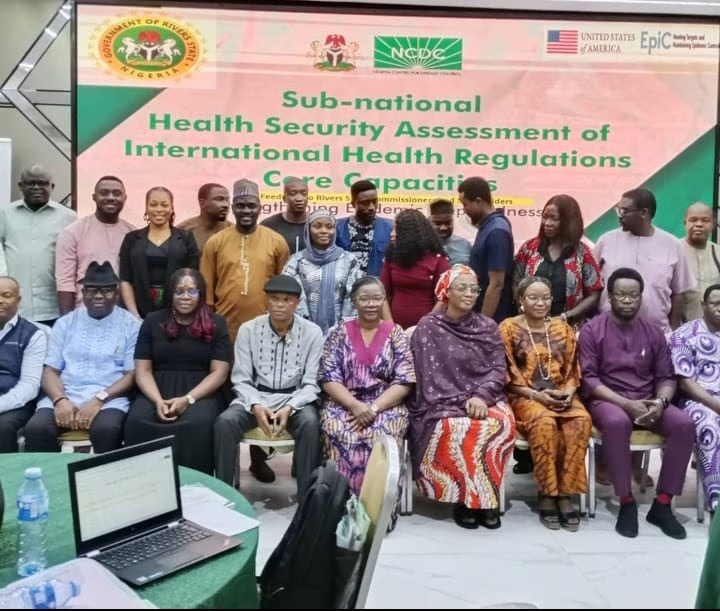
The three Permanent Secretaries, NCDC Directors, the JEE team, members drawn from the three Ministries (Agriculture, Health and Environment) during the health security assessment.
- Anumaka is the Information/Public Relations Officer, Ministry of Agriculture.
I’ve been trying a few sites lately and this one really stands out. The interface is smooth and the payouts are fast. Definitely recommend checking out plataforma7brwin if you want a reliable spot.