


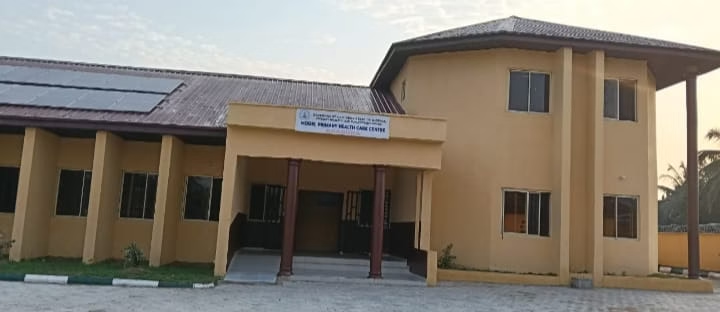
For years, primary healthcare in several communities across Rivers State existed more in structure than in function. Buildings stood, but services were inconsistent, equipment outdated, and patient confidence steadily declined.
Many residents bypassed nearby facilities and travel longer distances to assess treatment, or delayed treatment altogether. In the process, primary healthcare centres, designed to serve as the first point of contact within the health system, gradually lost their relevance.
In January 2026, the Rivers State Government, through the Rivers State Primary Health Care Management Board (RSPHCMB), in collaboration with the Rivers State Ministry of Health, launched a revitalisation programme across six Model Primary Health Care Centres (MPHCs).
The intervention, combining infrastructure renewal, equipment upgrades, improved staffing support, and community outreach, covered Bundu-Ama and Amadi-Ama, in Port Harcourt; Rukpokwu and Woji, in Obio/Akpor; Ozuaha, in Ikwerre; and Akabuka in Ogba/Egbema/Ndoni LGAs.
The objective was straightforward: restore functionality at the primary level, improve service readiness, and encourage communities to return to facilities built to serve them.
Early indicators now suggest a gradual rebuilding of trust: in Bundu-Ama, there is visible transformation and renewed utilisation.
Visible Transformation, Renewed Utilisation In Bundu-Ama
At the Bundu-Ama Model Primary Health Centre, utilisation surged within the first month following revitalisation. Facility records show general attendance rising from 163 visits in December 2025 to 506 in January 2026, more than tripling after services were rehabilitated and expanded.
New antenatal registrations increased from two to fourteen within the same period, while family planning uptake rose from 15 to 56 clients. Malaria rapid diagnostic tests jumped from 29 to 213, reflecting both increased patient turnout and expanded clinical activity.
Health officials caution that longer-term monitoring will be needed to determine whether this surge translates into sustained improvements in health outcomes. Still, the early figures point to renewed public confidence in the health system.
Across the surrounding community, residents identified shorter waiting times, improved facility conditions, and a growing willingness to seek routine care locally.
Madam Ibiso Tekena, a trader, said access has become significantly easier: “Before, we paid transport to go to centres like Churchill to see a doctor. Now we can get treatment here. It makes life easier for everyone”, she said.
Blessing Tamuno, who attends antenatal care at the facility, noted that improved infrastructure has changed perceptions.
“Before, I was discouraged because there might not be electricity. Now it feels good, and the staff takes time to explain everything carefully”, Tamuno stated.
Gradual Recovery In Maternal And Child Health In Amadi-Ama
At Amadi-Ama Model Primary Health Centre, the pattern is one of steady recovery rather than dramatic surge. General outpatient attendance rose from 200 visits in December 2025 to 312 in January 2026. Antenatal attendance increased from 44 to 51 clients, while postnatal visits within six weeks climbed from 11 to 15.
Immunisation services also recorded incremental growth, including increases in BCG vaccinations and total immunisation coverage, supported by renewed outreach and improved facility conditions.
Health workers attribute the gradual rise to community sensitization efforts, noting that awareness often builds progressively after facility upgrades. Officials emphasise that the data represent early trends and will require continued monitoring to assess long-term stability.
For many mothers, the impact is qualitative as much as quantitative. One nursing mother observed that the improved environment has made routine visits less stressful, encouraging consistent attendance for child welfare services.
Infrastructure As Foundation At Rukpokwu And Woji
In Rukpokwu and Woji, revitalisation has focused strongly on infrastructure and working conditions. Previously challenged by deteriorating structures and limited equipment, the facilities now operate in upgraded spaces designed to support efficient service delivery. Management reports improved staff morale and better patient–provider interaction.
While utilisation data are still being compiled, officials describe these improvements as foundational restoration of operational capacity necessary for consistent, quality primary healthcare.
A Reawakening Of Facility At Akabuka
In Ogba/Egbema/Ndoni Local Government Area, revitalisation has restored access where it was once absent. At Akabuka, the Model Primary Health Centre, which was previously non-functional, leaving residents without nearby primary care services, is now what could be termed a beehive of activities.
Following relocation and rehabilitation, outpatient visits nearly doubled, rising from an average of 427 patients monthly at the former site to 800 at the new location, representing an 87 percent increase.
For residents, the change carries symbolic weight: “This is the first time in many years doctors have treated us here,” a community leader said, describing the reopening as a turning point for the community.
Programme coordinators say the increase aligns with a broader objective: reducing pressure on secondary and tertiary hospitals by restoring confidence in primary-level care.
Nutrition Services Move to the Forefront
Beyond curative services, the revitalised facilities are strengthening preventive care, particularly nutrition services, for mothers and children.
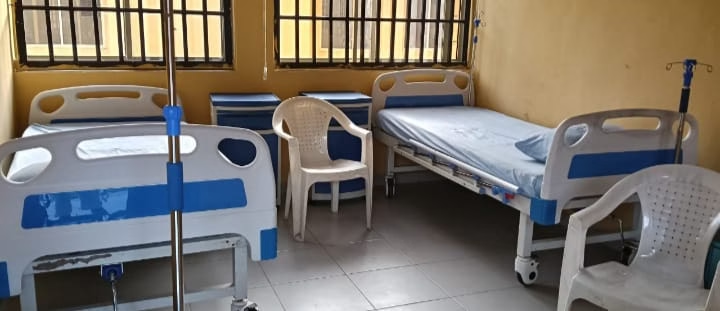
Nutrition counselling is now integrated into antenatal clinics, immunisation days, and community outreach sessions. Caregivers bring children not only for vaccinations, but also for growth monitoring and counselling on infant and young child feeding practices.
Mrs. Onyemad Nna, a mother of two attending a PHC in Obio/Akpor, said regular weighing and counselling have encouraged more consistent visits.
“Before, we did not come often. Now the health workers explain how to feed the child well and check the child’s weight every month”, she said.
The State Director of Nutrition, Dr. Carol Joseph, explained that such engagements help caregivers recognise early signs of malnutrition and adopt preventive practices using locally available foods.
She acknowledged challenges, including occasional shortages of nutrition commodities and limited trained personnel, but described the integration of nutrition into routine PHC services as a significant shift toward prevention rather than treatment alone.
Closing The Gap Between Illness And Care In Ozuaha
At Ozuaha in Ikwerre Local Government Area, residents say the revitalised centre has reduced both physical and psychological barriers to seeking care.
“Now we can come early before sickness becomes serious”, Mrs. Evelyn Amadi stated during a recent visit.
Health officials note that earlier care-seeking for minor illnesses, immunisation, and nutrition monitoring reduces complications that might otherwise require referral to higher-level hospitals.
During a community engagement, the Executive Secretary of the RSPHCMB, Dr. Chituru Adele, underscored the importance of shared responsibility.
He said, “This is not just a building; it is a promise. Use it and help protect it.”
Sustaining The Gains
To safeguard the investments, the RSPHCMB has established monitoring teams across all revitalised centres. These teams oversee compliance with clinical standards, monitor service delivery trends, and help protect facilities from vandalism, while also measuring what officials consider essential for long-term sustainability.
Meanwhile, as early increases in attendance suggest renewed public confidence, authorities caution that sustained staffing, consistent drug supply, reliable utilities, and continued community engagement will ultimately determine whether the gains will endure.
For now, the six Model PHCs represent more than refurbished buildings; they signal a deliberate effort to reposition primary healthcare as the foundation of Rivers State’s health system, bringing care closer to communities and restoring trust where it had once faded.