


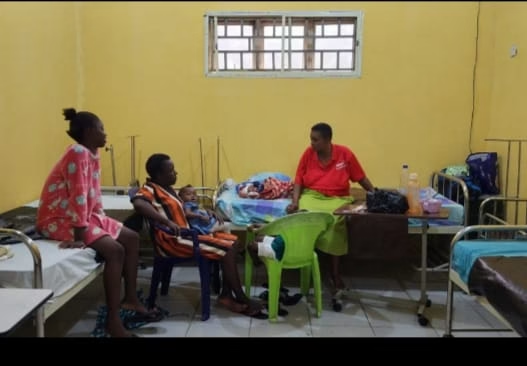
Just hours after giving birth at about 2:00 a.m. on July 17, Jennifer Robert rested quietly in the maternity ward of Tombia Model Primary Health Centre in Degema Local Government Area. Cradling her newborn, she reflected on the night’s events with gratitude.
“I came here late last night in labour”, she said. “I gave birth around 2:00 this morning. This is my fourth child, and both the baby and I are doing well.”
Jennifer smiled as she spoke about her next visit to the facility.
“The nurse has asked me to come to the family planning unit during my next visit so we can discuss family planning because I told her I now have the number of children I want.”
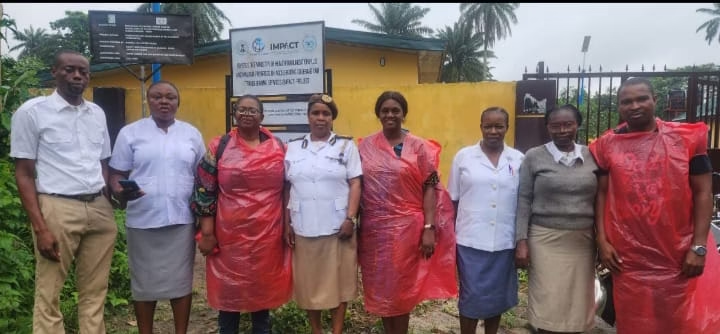
While Jennifer recovered with her baby by her side, another team quietly moved through the facility. They reviewed registers, verified routine health data, observed clinical services and engaged health workers in discussions on improving the quality of patient care.
The scene reflected the essence of the Rivers State Primary Health Care Management Board’s (RSPHCMB) second-quarter Integrated Supportive Supervision exercise. Conducted in collaboration with UNICEF, the exercise is being implemented across all 23 Local Government Areas of Rivers State to strengthen primary healthcare through mentorship, routine monitoring and collaborative problem-solving.
Unlike traditional inspection exercises, supportive supervision goes beyond identifying faults; it focuses on mentoring health workers, strengthening accountability, and helping facilities continuously improve the quality of care they provide.
“Supportive supervision is not about fault-finding,” said the Head of Special Services, Dr. Nnesochi Offor. “It is an opportunity to mentor health workers, strengthen accountability and ensure that every facility delivers quality healthcare to the communities it serves.”
Early findings from the exercise suggest that this approach is producing measurable results.
Supervision teams observed improved compliance with standard operating procedures and better documentation of health records across several facilities, including Ozuboko Model Primary Health Centre and Orugbum Model Primary Health Centre in Port Harcourt City, as well as Primary Health Centres in Ebubu (Eleme LGA), Obite (Etche LGA), Bukuma and Tombia (Degema LGA).
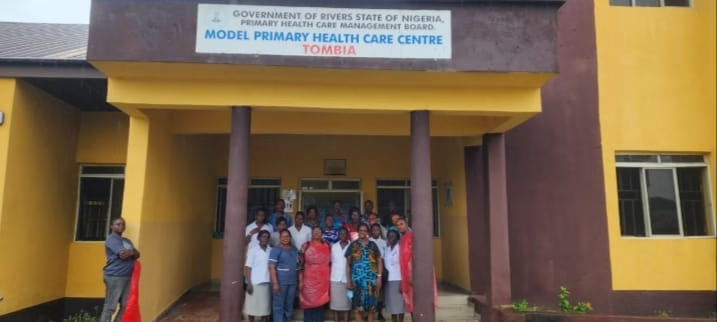
At Tombia Model Primary Health Centre, supervisors found a clean, orderly environment where health workers were providing uninterrupted services.
Patient records were carefully reviewed and verified, while staff worked alongside supervisors to improve documentation and ensure that routine health data accurately reflected services delivered.
Another encouraging finding was the growing enrolment in the Rivers State Contributory Health Protection Programme (RIVCHPP), indicating increasing public confidence in the state’s health insurance scheme and expanding access to affordable healthcare.
One of the most striking aspects of supportive supervision is its emphasis on immediate action.
During one facility visit, damaged furniture identified by the supervision team was repaired on the spot by a local handyman. The swift intervention demonstrated how routine supervision can resolve operational issues before they affect service delivery.
Not all the findings, however, were positive. For instance, the teams documented infrastructure challenges requiring follow-up, including non-functional or partially functional solar power systems in facilities at Isokun, Obuama, Degema, Bile, Bukuma and Tombia. Roof leakages requiring urgent repairs were also observed at the Tombia Model Primary Health Centre.
Rather than waiting until the end of the exercise, discussions on possible solutions began immediately.
During the visit, the Medical Officer of Health for Degema, Dr. Lolia Koko, contacted the team responsible for the solar installations to obtain an update on the affected facilities. The technical team explained that maintenance work was being carried out in phases across the state and assured her that Degema was included in the implementation schedule.
“When we identify operational challenges, we do not wait until the end of the exercise,” Dr. Koko said. “We engage the relevant teams immediately so that solutions can begin. That is the value of supportive supervision.”
The exchange illustrated one of the defining strengths of Integrated Supportive Supervision. Problems are not merely documented; they are escalated promptly to the appropriate teams so that corrective action can begin without unnecessary delays.
Elsewhere in Degema, the supervision team witnessed another sign of progress.
In Bukuma, a former health post is gradually being transformed into a revitalised Primary Health Centre. Although the facility is yet to be commissioned and work continues on water supply and external finishing, the transformation is already evident. Newly renovated buildings, a completed perimeter fence and expanded clinical spaces reflect the state’s continued investment in strengthening primary healthcare infrastructure.
For the Officer-in-Charge of Bukuma Primary Health Centre, Kaine Mangibo, the supervision visit also provided an opportunity to receive technical guidance while highlighting the facility’s remaining needs.
For families like Jennifer’s, such investments represent far more than new buildings. They mean improved access to skilled maternal healthcare, childhood immunisation, disease prevention and other essential primary healthcare services closer to home.
Across all the facilities visited, one message emerged clearly: strong primary healthcare depends on more than infrastructure; it requires committed health workers, reliable health information, effective supervision and timely action to address emerging challenges.
As the statewide supportive supervision exercise continues, findings from the field will inform evidence-based planning, strengthened routine reporting and guide targeted interventions aimed at improving primary healthcare services across Rivers State.
For Jennifer, the supervision exercise unfolded quietly in the background as she welcomed a new life into the world. Yet the decisions made during those visits — from improving data quality and mentoring health workers to repairing infrastructure and resolving operational challenges — will influence the quality of care received by countless mothers, children and families in the months ahead.
That is the true value of supportive supervision. It is not simply about completing checklists. It is about continuously strengthening the systems that save lives, improve healthcare delivery and build healthier communities across Rivers State.
- Onyiri is the Information/Public Relations Officer, RSPHCMB.