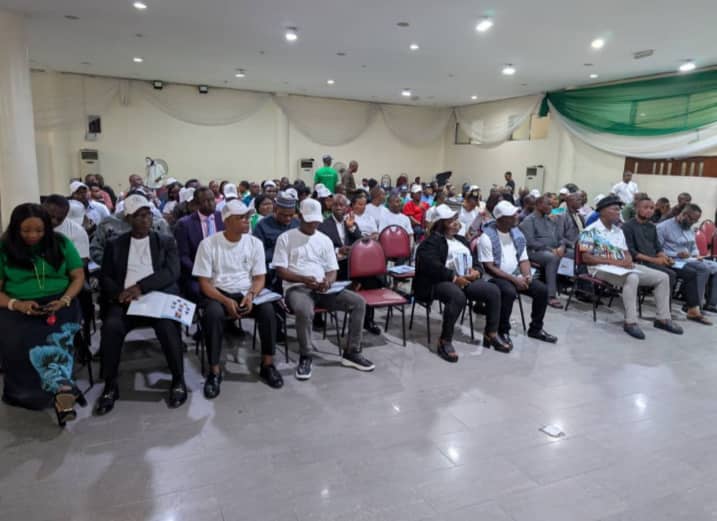
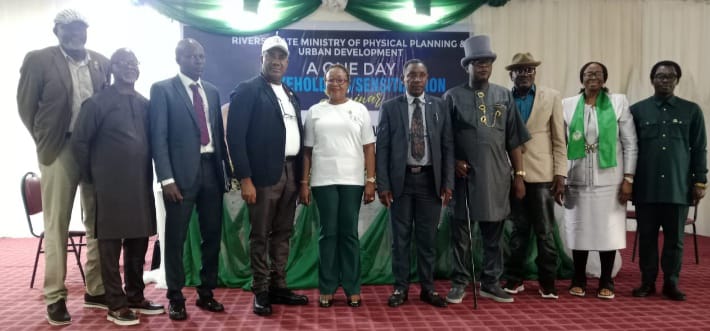
The Rivers State Government (RSG) has called on citizens, investors, and key stakeholders to play active roles in the development of both urban and rural communities across the state.
Making the call yesterday, during a one-day stakeholders’ sensitization meeting held at the Ministry of Justice Hall, State Secretariat complex in Port Harcourt, the Secretary to the State Government (SSG), Prof. Ibibia Lucky Worika, said building a vibrant, sustainable, and equitable society requires citizens to look beyond personal interests and engage in collective decision-making.
Prof. Worika, who was represented at the occasion by the Director of Administration in the SSG’s office, Prof. Onueka Ugo Smauel, said, “Our goal is to create a sense of collective ownership.
“When citizens participate in local governance, it leads to stronger communities, increased accountability, and long-term empowerment.”
Themed “Your City, Your Voice”, the seminar underscored the importance of civic involvement in shaping government policies, public services, and infrastructural projects that directly impact the lives of residents.
“Wherever we find ourselves, we must act in the interest of our communities as stakeholders, citizens, and residents of Rivers State”, he stated.
Prof. Samuel also reassured attendees of the State Government’s commitment to transparency and responsiveness, encouraging the public to hold the government accountable by constructively engaging with elected officials.
In her remarks, the Permanent Secretary of the Ministry of Physical Planning and Urban Development, TPL Soibetein Duke Harry, highlighted the importance of community collaboration in urban planning and growth.
“This event is an opportunity to recognize the power of community engagement in shaping the future of our towns and cities. A synergy between local governments, the health sector, and the State Government will help curb malpractice and ensure safer construction practices to prevent building collapse”, the Permanent Secretary stated.
She reiterated that residents, professionals, traditional leaders, and investors all have critical roles in determining the quality of communities in Rivers State.
She also advocated for strict adherence to planning regulations, including acquisition of the necessary approvals before construction begins.
“When stakeholders embrace these principles, our urban spaces become more organized, inclusive, environmentally friendly, and sustainable”, she added.
Chairman of the occasion, Dr. Simeipiri Johnbull, stressed the need for meticulous planning and structured development across the state.
He called for the revision of existing master plans and the preparation of new urban development plans, especially for fast-growing settlements such as Isiokpo, Akpajo, Omagwa, Aluu, Igwuruta, and Elelenwo, within the Port Harcourt metropolitan area.
“Proper layout planning and community involvement in the approval process ensure developments aligned with local needs and avoid the haphazardous growth patterns we are currently witnessing”, he said.
Dr. Johnbull further recommended that plans be approved before any construction begins, to maintain safety standards and regulatory compliance.
He also emphasized the need for increased manpower to oversee planning processes, noting that effective land-use planning is critical to the state’s long-term sustainability.
Delivering a keynote lecture on “Community Participation in the Planning Process”, Dr. Tari Eyenghe outlined the steps involved in inclusive planning: problem identification, data collection and analysis, and decision-making.
“Community participation fosters informed decisions and promotes sustainable governance,” he said, adding that “It is essential for meaningful development.”
Also speaking, the Director of Development Control and Enforcement, TPL Eleeh Chimieze Onyekachi, cautioned builders against using fake cover letters for construction approval.
“Only government-approved documents are valid. Anyone caught using forged or unauthorized documents will face legal consequences”, he warned.
He urged the public to report individuals involved in such acts and advised landowners with large holdings (20 plots or more) to map out proper layouts, stating that well-planned layouts significantly increase property value.
The sensitization seminar was organized by the Ministry of Physical Planning and Urban Development, and served as a platform to reinforce the state’s development goals through community involvement and strategic planning.