


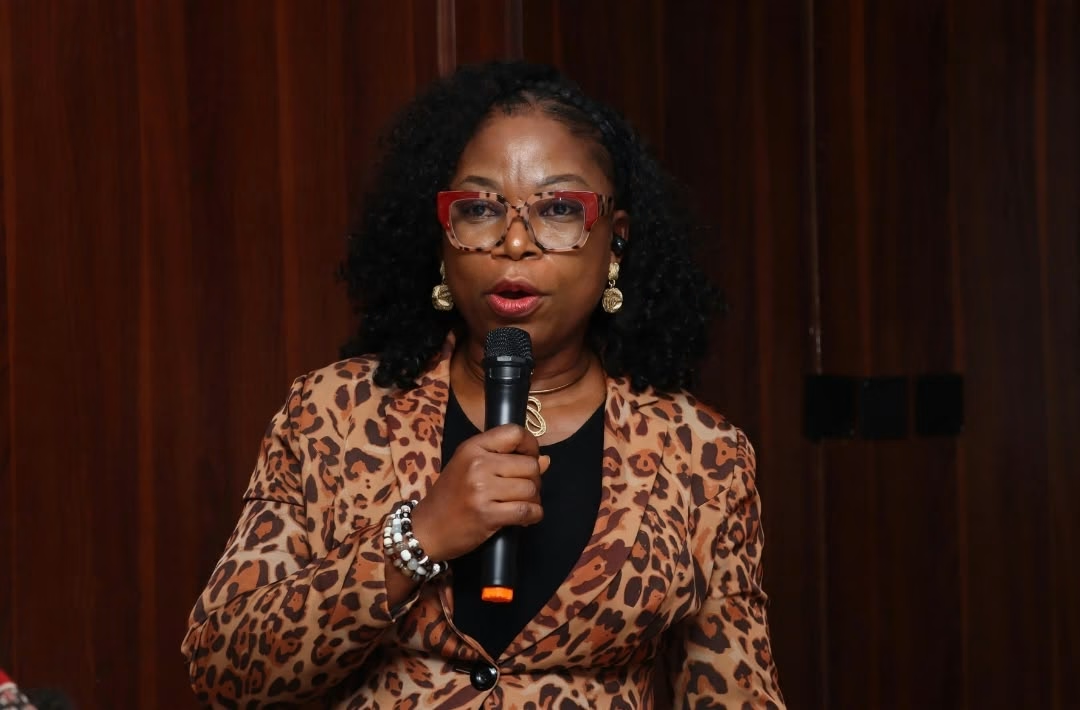
The Permanent Secretary, Rivers State Ministry of Social Welfare and Rehabilitation (RSMSW-R), Lauretta Davies-Dimkpa, has charged traditional rulers to take ownership of Gender-Based Violence (GBV) prevention and tackle harmful traditional practices in their domains.
She gave the charge in Port Harcourt during a validation meeting for a proposed GBV Prevention Manual for Traditional Rulers in Rivers State and Nigeria.
The manual was developed by ActionAid Nigeria to strengthen prevention at the community level and equip traditional institutions with practical guidance.
The Permanent Secretary, whose Ministry supervises ActionAid Nigeria’s GBV interventions in the state, thanked the organisation for developing the manual despite winding down its project.
She urged traditional rulers to take the lessons from the meeting back to their councils and communities, noting that while the Ministry is working with ActionAid, UNICEF and other partners to create awareness, community leaders have the responsibility to sustain the message.
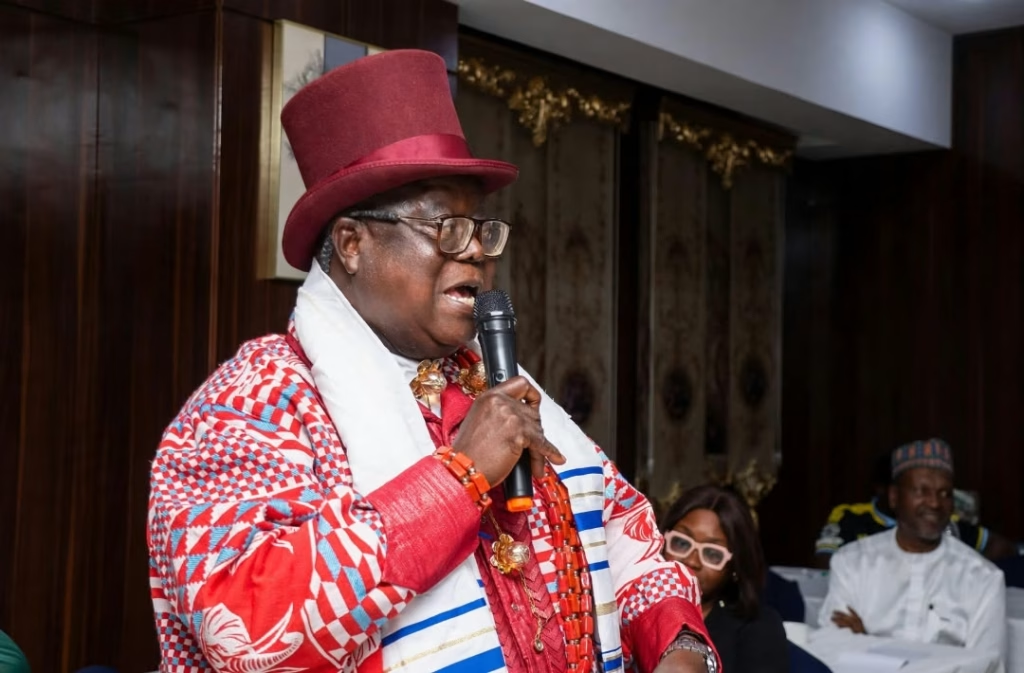
She added that repeated sensitization is necessary to neutralise age-long harmful beliefs and that the Ministry remains open to partnerships to prevent GBV in the state.
In her overview of the manual, ActionAid Nigeria’s Specialist, MAP-GBV Projects, Lagos Office, Ifeoma Anabraba, said the 11-chapter manual is organised into three sections: Foundations for Prevention; Prevention in Action; and Response, Referral and Accountability.
Anabrabra explained that the first section examines the forms of GBV, cultural and gender norms that fuel violence, the leadership responsibilities of traditional rulers and relevant legal frameworks.
“The second section outlines practical measures for preventing violence and promoting safer communities, while the third focuses on appropriate responses to GBV incidents, referral pathways for survivors and mechanisms for accountability”,she stated.
She noted that GBV takes different forms, including physical, emotional, sexual, financial and online violence, and can occur in homes, schools, workplaces, markets and religious institutions.
She added that each chapter of the manual has a ”Palace Wisdom” segment requiring traditional rulers to reflect on the lessons and commit to actions that promote safety, justice and prevent GBV.
On her part, the Programme Officer for the Multistakeholder Action for the Prevention of Gender-Based Violence (MAP-GBV) Project, Gladys Imoh, described the manual as a potential “GBV prevention Bible” for traditional rulers because of its role in guiding prevention efforts.
She stressed that traditional rulers could use it to initiate preventive actions, challenge harmful practices and promote attitudes that reject all forms of GBV.
She clarified that the manual is not intended to replace the Violence Against Persons (Prohibition) Law (VAPP), but to complement it by providing practical steps to prevent violence before it occurs.
Imoh urged participants to critically examine the manual and provide honest feedback to improve its content and usability.
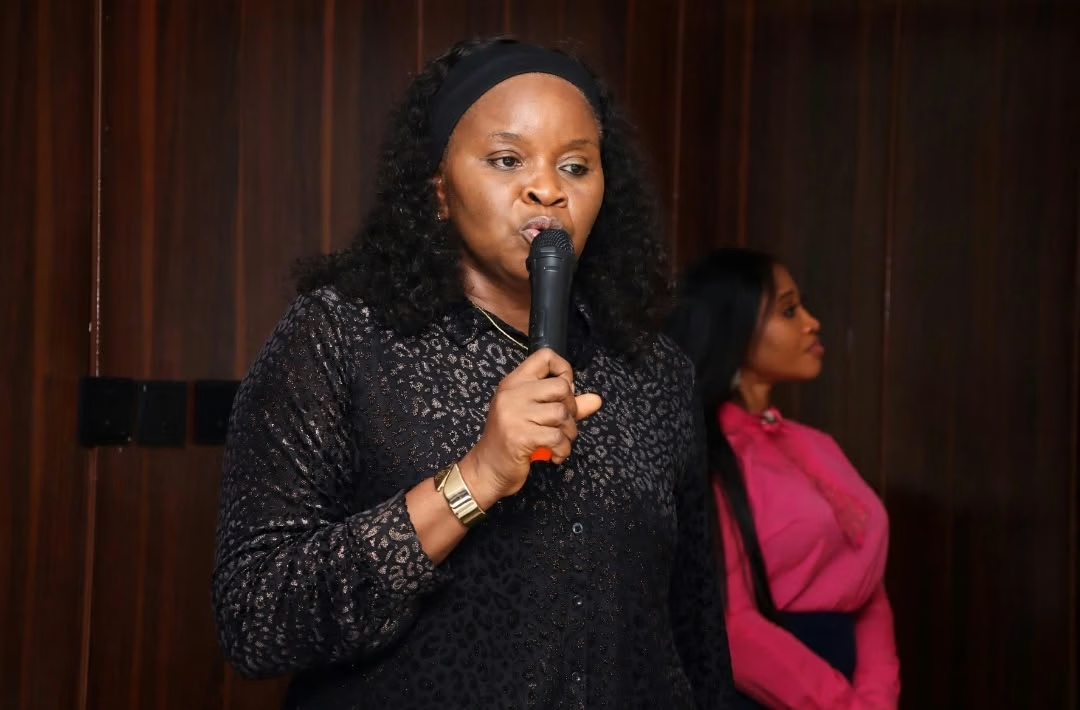
Earlier in her welcome address, the Coordinator of the Rivers State Multstakeholder Action Committee, GBV Prevention, Evelyn Membere-Asimiea. commended the State Ministry of Social Welfare and Rehabilitation for its efforts in implementing the VAPP Law and advancing the state’s GBV response.
Membere-Asimiea, a lawyer, who is also the Head, Office of the Public Defender, Rivers State Ministry of Justice, acknowledged ActionAid Nigeria’s contribution to the manual, describing it as an important tool for strengthening prevention at the grassroots.
She emphasised the need for traditional rulers to be actively involved in the validation to ensure it reflects community realities.
The validation session provided an opportunity for traditional rulers and some members of the State Multstakeholder Action Committee for GBV Prevention to review the manual, assess its practical application and make recommendations towards a user-friendly resource for traditional rulers.
The initiative is expected to strengthen community-based prevention by equipping traditional leaders to identify risks, challenge harmful norms and promote safer environments for women, girls and other vulnerable persons.
- Igbiks is the Information/Public Relations Officer, RSMSW-R.